
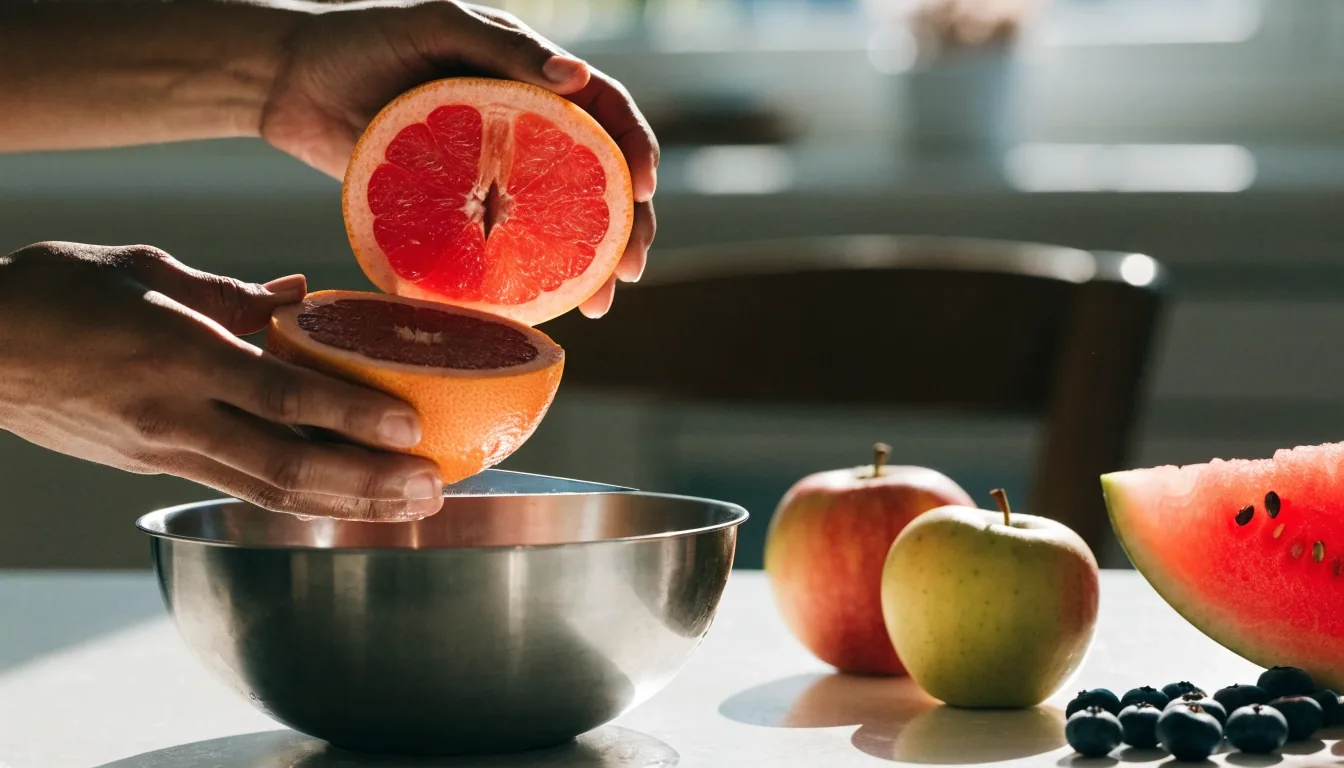
How Fruit Fits Into a Man's Everyday Diet
FruitWise is an editorial resource about whole fruit, portion habits, and how fruit sits alongside the rest of what you eat. No product to buy, no account to open: reading material for men who want plain answers about fruit intake, variety, and everyday eating patterns.
You do not need a special diet to start. You need to know which fruits you already like, when you will realistically eat them, and how much makes sense on a plate.
Start With What Five-a-Day Actually Means
The five-a-day idea is a shorthand, not a scoreboard. It describes roughly five portions of fruit and vegetables combined across a day, where one portion is about 80 grams: a medium apple, a handful of berries, two small clementines, or a thick slice of melon.
Fruit can carry part of that total, not all of it. If you eat four pieces of fruit and no vegetables, you have not balanced anything. The mix matters as much as the number.
For most men, the honest starting point is simpler than any target: how much fruit do you eat now? Two portions most days is a real baseline, and building toward four or five portions across fruit and vegetables is a reasonable direction.
- A medium apple handheld, no prep
- A handful of berries on yogurt or oats
- Two small clementines travels well
- A thick slice of melon warm months
- 05 Four or five portions across fruit and vegetables daily direction
Count portions for three days if you are unsure where you stand. It takes a minute a day and tells you more about your fruit intake than any general advice.
Why Whole Fruit Beats Juice as a Default
Whole fruit gives you fiber, water, and the fruit's own structure in one package. A whole apple takes minutes to eat. A glass of apple juice takes seconds and delivers the sugar of several apples without the fiber that slows it down. That gap is the single most useful thing to understand about fruit intake.
Juice is not forbidden. One small glass alongside breakfast is fine. The problem starts when juice replaces the fruit itself across the week, because then you have the sweetness and not much of the chew.
The Fruits That Do the Most Work
Berries, citrus, apples, pears, and melons cover most everyday needs. Below, each group carries what it is good for, how easy it is to keep, and the simplest way to serve it. Avocados and pomegranates sit in a different category: avocado is a fruit you use in savory meals, which matters for men who do not want sweet snacks.
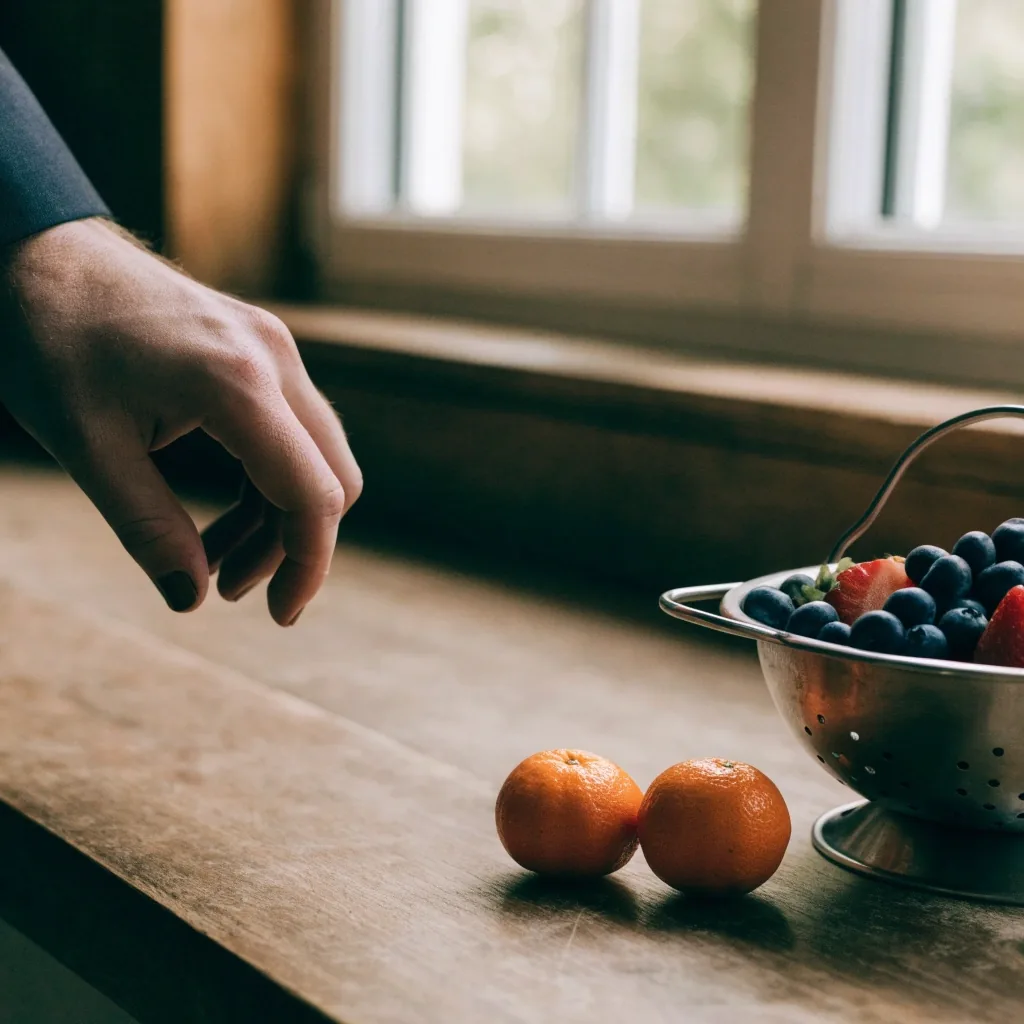
Winter citrus · keeps for days
Two small clementines make one portion and need nothing but a rinse.
Berries
Color on top of yogurt or oats, and easy to keep frozen through winter.
Citrus
Convenient in winter and it travels well, so it survives a commute in a bag.
Apples and pears
Keep for days and need no preparation beyond a rinse under the tap.
Melons and watermelon
Simple to portion in slices and easy to eat in warm months.
Avocado
Savory rather than sweet, which helps if dessert-style fruit does not appeal.
Pomegranate
Adds texture and interest when a routine starts to feel repetitive.
You can read the full comparison in our variety guide: which fruits to buy in which season, how to store them, and how each one is easiest to serve.
Compare fruit groupsFruit Alongside Protein, Fats and Grains
Fruit works better with something else than on its own. Yogurt with berries, oats with banana, nuts with an apple, avocado on toast: each pairing adds protein or fa that keeps you full longer than fruit alone. This is not a rule about nutrition science. It is practical. Fruit by itself at 4pm rarely holds anyone until dinner.
If you train, fruit around activity is a sensible habit. A banana before a session and a piece of fruit after is easy to repeat and needs no planning. Nothing about it depends on a supplement or a shake.
Yogurt with berries
breakfast · 3 minutes
Oats with banana
breakfast · 4 minutes
Nuts with an apple
afternoon · no prep
Avocado on toast
savory · 5 minutes
Timing: Breakfast, Snack, or After Dinner
Breakfast is the easiest slot to win. Fruit requires no cooking, and most people already have a bowl or a plate in front of them. A snack is the second easiest if the fruit is visible and ready to eat. After dinner, fruit can replace dessert some nights without feeling like a sacrifice.
The weakest slot is the one you forget. Fruit in a drawer does not get eaten. Fruit on the counter does. That single change in where you keep it does more for intake than any plan, and it costs nothing.
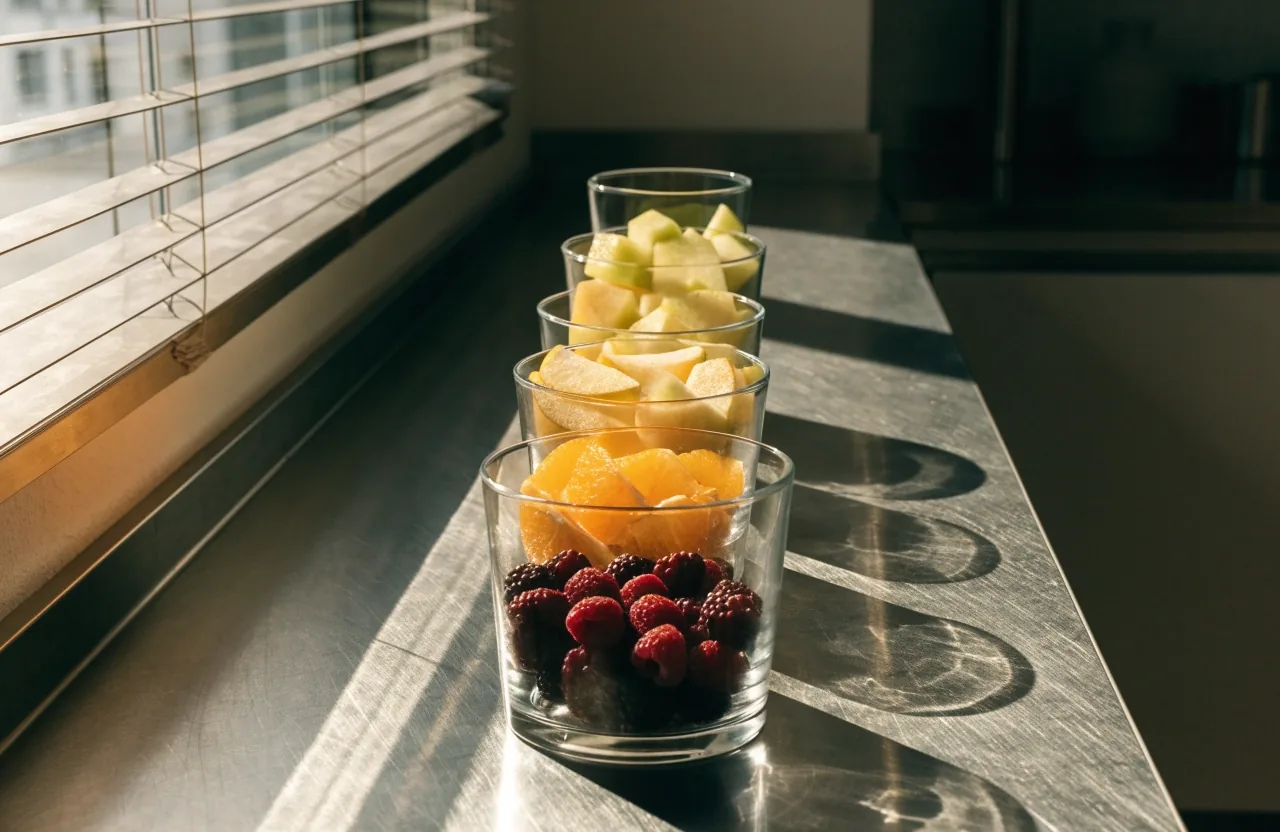
Where the fruit actually gets eaten
Reading Fruit Research Without Overreading It
Nutrition research on fruit is mostly about patterns, not single foods. Studies tend to compare people who eat more fruit and vegetables with people who eat less, and they describe associations across years, not outcomes for one person on one Tuesday.
Mainstream guidance links diets rich in fruit and vegetables with lower blood pressure and lower risk of heart disease and stroke, and notes benefits for eye and digestive health and blood sugar management. That is worth knowing without turning it into a promise. No fruit prevents anything on its own.
What the evidence supports is a pattern: more whole fruit, more vegetables, less highly processed food, sustained over time. Our wellbeing page walks through the studies and what they do and do not show.
- Population studies, long time frames
- Associations, not guarantees for one person
- Whole diet patterns, not single fruits
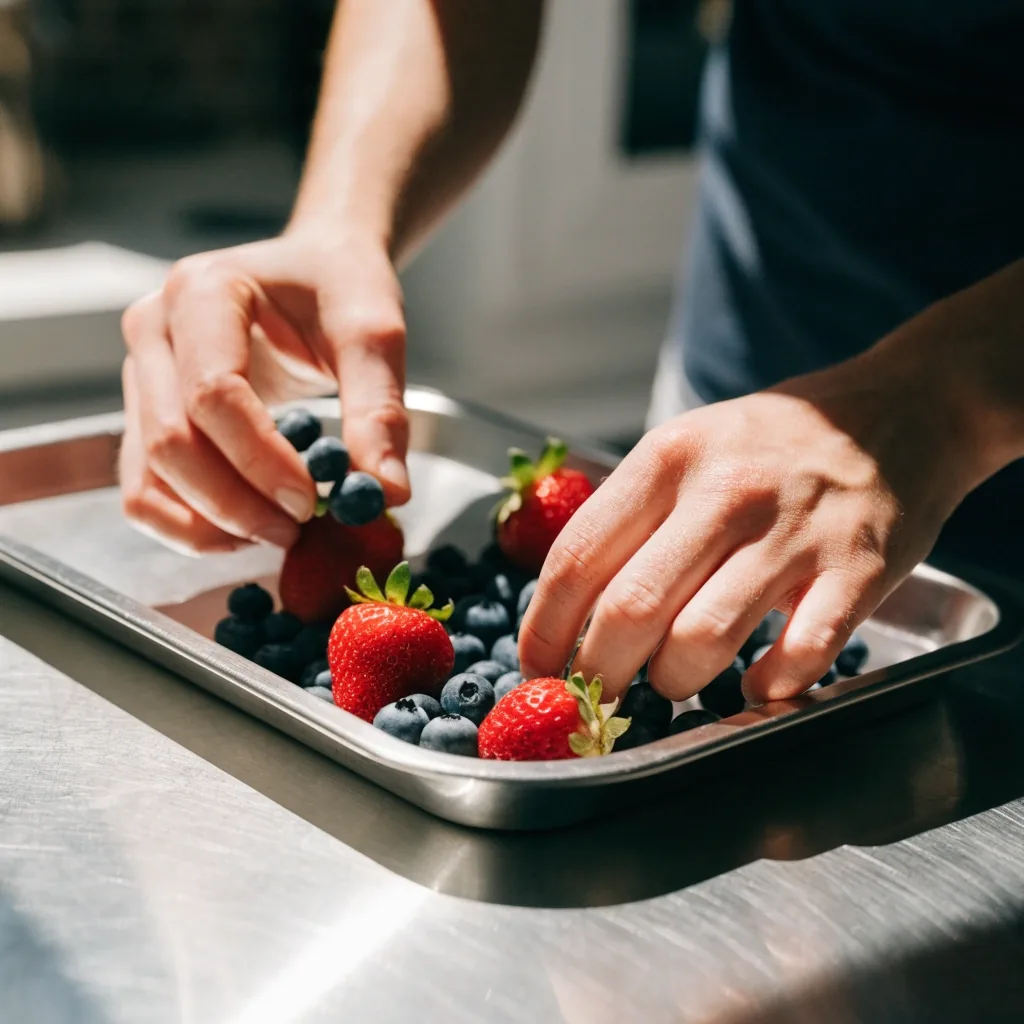
Nothing on this site sells a fruit, a powder, or a plan. The pages are reading material, and the only source we cite is published nutrition guidance.
Fresh, Frozen, Canned or Dried
Fresh is not the only valid form. Choose by what you will actually eat, not by what sounds best on a label. A bag of frozen berries you use three times a week beats fresh raspberries that rot in the fridge.
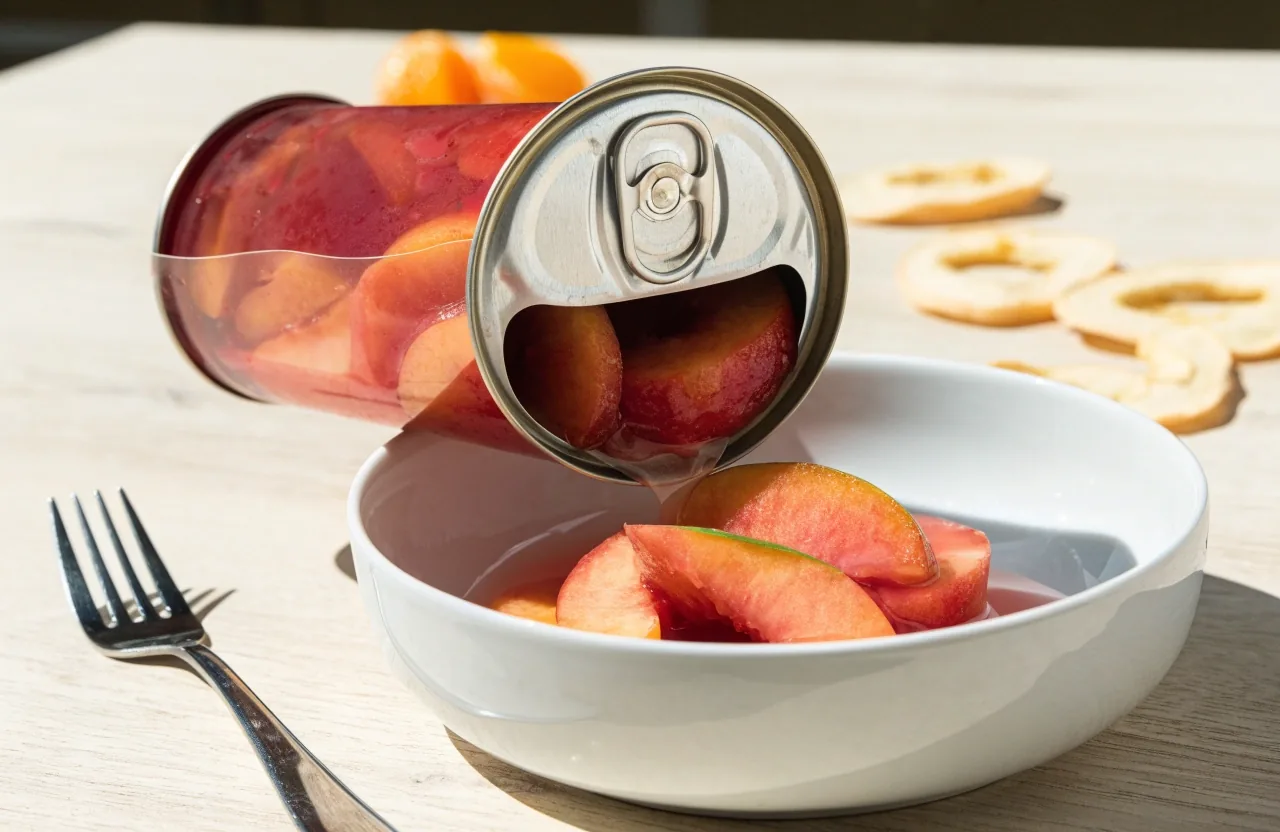
Frozen
Picked and frozen quickly and it keeps for months, which makes it the good option for berries outside their season.
Canned
Works when it is in juice rather than heavy syrup. Check that line before you buy, because it changes what you are actually getting.
Dried
Concentrated, so a small handful is closer to a full portion than it looks. It also sticks to your teeth, which is worth rinsing after.
Fresh
The most pleasant form when it is in season and you will eat it. Otherwise it is the form that quietly goes soft in the bottom drawer.
Portion Sizes Without a Scale
You do not need to weigh anything. A portion is roughly what fits in one hand: a medium apple, a small banana, a handful of grapes or berries, a slice of melon, two small clementines, or three dried apricots. Learn four of those and you can estimate a day's intake without thinking about it.
one hand
A medium apple or a small banana
one handful
Grapes or berries, eaten in a few minutes
one slice
Melon or watermelon, cut to palm width
two pieces
Small clementines, peeled in a minute
three pieces
Dried apricots, closer to a full portion than they look
watch this
Juice and dried fruit are the two easiest things to over-count
Men often underestimate dried fruit and juice and overestimate how much fresh fruit they eat. If you are unsure, count portions for three days. It takes a minute a day and tells you more than any general advice.
See portion guidanceWhat Changes When You Build Variety
Eating the same apple every day is better than eating no fruit, but it narrows what you get. Different fruits bring different fiber types, different polyphenols, and different flavors, and rotating them keeps the habit from going stale.
A simple way to build variety is to keep one berry, one citrus, one easy handheld fruit, and one seasonal fruit in the house at any time. That covers most of the week without a shopping list you will abandon by Thursday.
Four slots in the kitchen, four kinds of fruit
The variety guide on this site breaks down each group: what to look for, how to store it, and how to serve it without a recipe.
Common Mistakes Men Make With Fruit
Three habits show up again and again. None of them are dramatic failures, and all three are easy to correct. Fix the storage first. Then fix the juice. Then add one vegetable you already tolerate to the same meal as your fruit.
Counting juice like whole fruit
A glass of juice delivers the sugar of several fruits without the fiber that slows it down. It is easy to drink two glasses and count them as two portions of fruit. Swap one of them for the fruit itself.
Storing fruit out of sight
Buying fruit with good intentions and putting it in a drawer is the most common way a good week turns into a wasted bag. Move what you plan to eat to the counter, and keep longer-keeping fruit in the fridge.
Treating fruit as a vegetable substitute
Fruit can carry part of the five-a-day total, not all of it. Fruit and vegetables work as partners: the mix is the point, and swapping one entirely for the other leaves the plate narrower than it needs to be.
Where Fruit Goes in a Normal Week
Everyday fruit habits do not need a meal plan. They need four moments you will actually repeat: something with breakfast, something in the afternoon, something around training, and something after dinner on the nights you would otherwise reach for dessert.
If you want the practical version of that, with meal ideas and no recipes to memorise, it is written up in the habits guide. The short version is below.
See everyday fruit habits
How to Use This Site
FruitWise is organized around questions, not a sales funnel. There is no account, no plan, and no product.
If something here is unclear or you think we got a fact wrong, the contact page reaches the editorial team directly.
Send the editors a correctionQuestions readers send most often
How many portions of fruit should a man eat a day?
General guidance points to about five portions of fruit and vegetables combined per day, where a portion is roughly 80 grams. Fruit can contribute part of that total. Three to four fruit portions alongside vegetables is a realistic target for most men.
Is fruit juice as good as whole fruit?
No. Whole fruit includes fiber and takes longer to eat. Juice delivers sugar quickly and is easy to over-consume. One small glass occasionally is fine; it should not replace whole fruit across the week.
Does frozen fruit count the same as fresh?
Yes, for everyday purposes. Frozen fruit is typically frozen soon after picking and keeps most of its nutritional value. It is often the more practical choice for berries outside their season.
Which fruit is easiest to add to a daily routine?
Apples, bananas, and clementines need no preparation and travel well. Berries are quick on yogurt or oats. Start with whichever of those you already like and keep it visible.
Do I need to eat fruit at a specific time of day?
No. Breakfast and snack times tend to be easiest because fruit is quick and needs no cooking. Consistency across the week matters more than the clock.
Who Writes FruitWise
FruitWise is an editorial resource written for men who want plain answers about fruit intake, variety, and everyday eating patterns, without a product attached. Pages are checked against published nutrition guidance and updated when that guidance moves.
We say where a fact comes from. We say what a study does and does not show. And when a claim cannot be supported by the guidance, we leave it out rather than dress it up.
The editorial team works from 24 Rue des Fruits, 69002 Lyon, France. Reach us Monday to Friday, 9:00 AM to 6:00 PM, by phone on +33 1 42 07 27 61 or by email at [email protected].
How we research and update our guidance
Start With One Page
If you want the short version of what research says, go to the wellbeing page. If you want to know which fruits to buy and how to serve them, the variety guide is the practical one. If you want portions and meal timing, the balanced diet page covers it. For quick answers, the FAQ handles the questions readers send most often.
Reading material only. Nothing on this site is offered as a substitute for advice from a qualified professional, and no fruit or page here is presented as a product. If you have questions about your own diet, ask someone qualified who knows your situation.