
Portions, timing, and the rest of the plate
Fruit in a Balanced Diet for Men
A balanced diet is not a fixed formula. For most men it means vegetables, fruit, whole grains, protein sources and fats, with processed food taking up less room than it currently does. Fruit is one supporting part of that mix, and this page is about where it fits.
What a balanced pattern looks like
The pattern most guidance describes includes vegetables and fruit in quantity, whole grains, legumes, fish, nuts, and low-fat dairy or equivalents. No single group carries the whole thing. Fruit contributes fiber, water and a range of compounds, and it does so cheaply and with no preparation.
The practical test is not whether your diet matches a diagram. It is whether most meals contain something from more than one group.
How many portions, and where fruit fits
General guidance points to about five portions of fruit and vegetables combined per day, with a portion at around 80 grams. Fruit can take part of that, and vegetables the rest. Three to four fruit portions alongside two or three vegetable portions is a realistic split for most men.
Nothing breaks if the split shifts. The number to move is the combined total, and the direction is up.
Fresh fruit
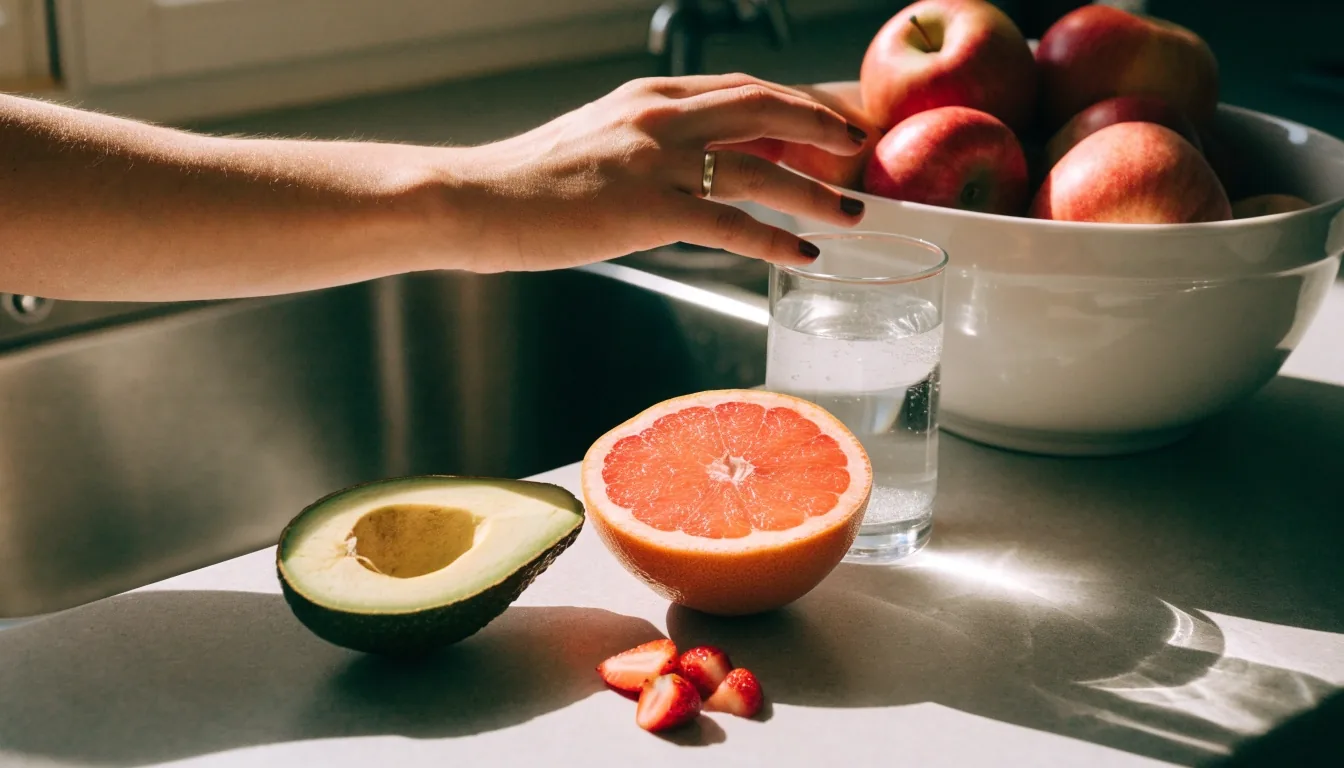
1 medium apple, 1 small bananaThe easiest form to count, and the one most men overestimate. A thumb-sized gap between fruit and vegetable portions is normal and fine.
A handful of berries or grapes
1 portion · 80 gTwo cupped hands, level, is a fair estimate. Packed berries weigh more than loose ones, so stop at level rather than heaped.
Melon and large fruit
1 thick slice · 80 gA slice the width of your palm and as thick as two fingers. Watermelon and melon are heavy with water, so the slice looks generous against its actual weight.
Dried fruit
3 apricots or 1 tbsp raisinsConcentrated, so a small handful is close to a full portion. This is the form men most often underestimate, and it sticks to teeth — rinsing afterwards is a sensible habit.
Portions without weighing anything
A medium apple, a small banana, a handful of berries or grapes, a thick slice of melon, two small clementines, or three dried apricots. Learn four of those and you can estimate a day without a scale. Most men overestimate fresh fruit and underestimate dried fruit and juice, which are more concentrated than they look. If you are unsure, count portions for three days. It takes a minute a day.
Fresh, frozen, canned and dried
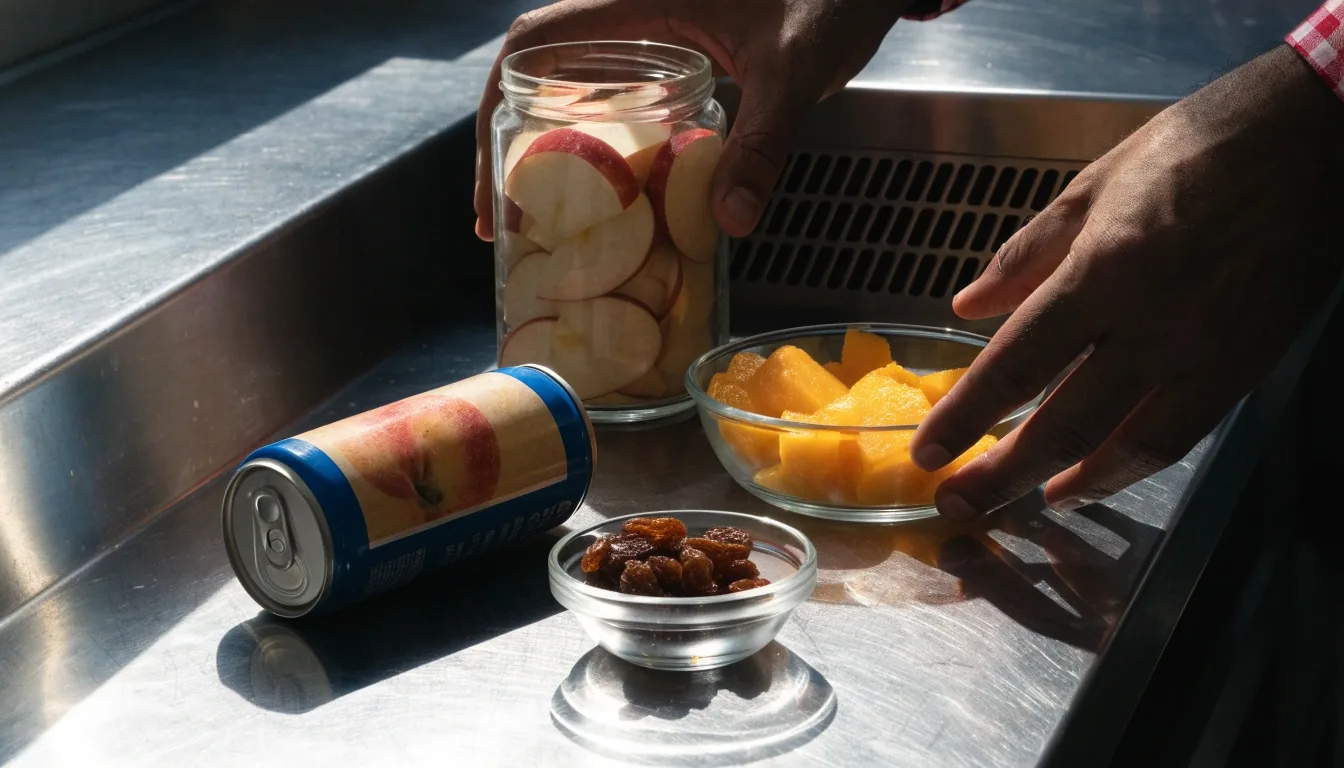
All four can count. Frozen fruit keeps for months and works anywhere fresh berries do. Canned fruit is fine when it is in juice rather than syrup. Dried fruit is concentrated, so a small handful is close to a full portion, and it sticks to teeth, which makes rinsing afterwards a sensible habit.
Choose the form you will actually eat. A bag of frozen berries used three times a week beats fresh raspberries that spoil in the fridge.
Frozen: counted the same as fresh, and the practical pick when your week is unpredictable.
Canned in juice: counts, and keeps in a cupboard without planning.
Dried: counts, but a small portion goes a long way and it is easy to eat more than intended.
Juice: the form where portions add up fastest, which is why whole fruit is the steadier habit.
Vegetables and fruit together, not instead
Fruit is not a substitute for vegetables. They overlap but do not replace each other, and the research that links diets with better outcomes is about both together. If you eat plenty of fruit and almost no vegetables, the useful move is adding vegetables, not eating more fruit.
Start with one vegetable you already tolerate and serve it in the same meal as your fruit. That is the whole tactic. Carrots alongside an orange at lunch, or green beans at dinner with a pear afterwards, counts as two groups in one sitting and takes no extra thinking.
Two groups at one meal
Meal-by-meal placement
Breakfast is the easiest place to add fruit, because it needs no cooking. Lunch works if you keep fruit somewhere visible. Dinner is where vegetables should dominate, and fruit can take the dessert slot. Snacks are optional but useful for men who eat late or train. Pick two of those slots and make them reliable before adding a third.
No cooking needed
The one slot where fruit fits without changing anything else about the meal.
Visible or it is forgotten
Fruit left on the desk or in the front of the bag gets eaten. Fruit in a drawer does not.
Vegetables first, fruit after
Vegetables should take the main part of this plate. Fruit works as the dessert slot.
Optional, not required
Useful if you eat late or train in the afternoon. Skip it if your three meals already hold two portions.
Where fruit sits with protein and fats
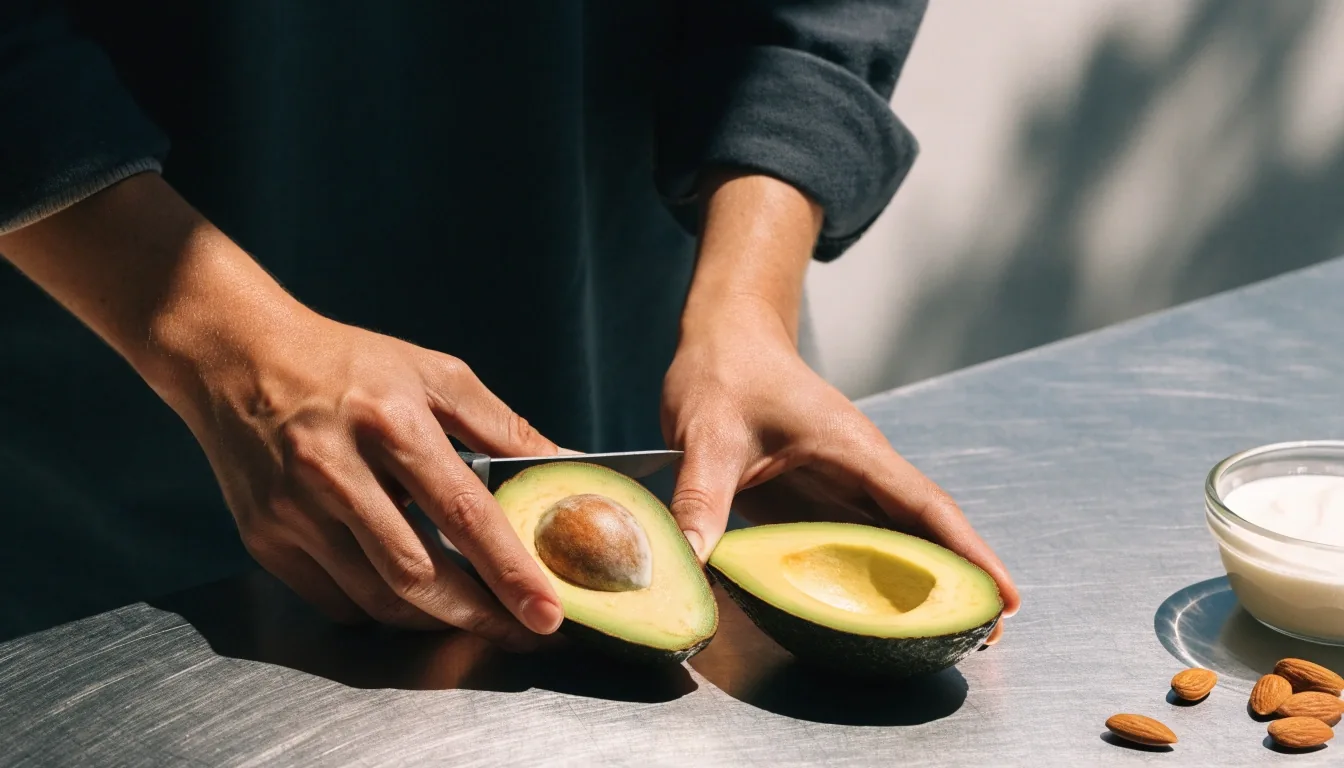
Pairing fruit with protein or fa changes how long it holds you. Yogurt with berries, oats with banana, nuts with an apple, or cheese with pear each add staying power that fruit alone does not have. This matters most at breakfast and at the end of the afternoon.
It also makes fruit easier to fit into a meal rather than treating it as a separate thing to remember.
Fiber, and why whole forms matter
Whole fruit brings fiber. Juice mostly does not. That difference is the main practical argument for eating fruit rather than drinking it, and it is also why dried fruit deserves a smaller portion than fresh. Fiber is one of the reasons diets high in fruit and vegetables are associated with digestive and blood sugar benefits in the research.
If most of your fruit intake is juice, moving one glass a day to a whole piece is a reasonable first change. Keep the rest as it is and see how the week reads before adjusting anything else.
Compare fruit groupsThe same fruit, two forms
Alcohol, snacks and the rest of the plate
What the pattern reads as
Fruit does not cancel anything else on the plate. A man who eats fruit daily and drinks heavily most evenings has not balanced his week, and the same goes for someone who eats fruit and mostly processed food. The pattern is what counts, and fruit is one of the easier pieces to get right.
That is not a moral point. It is just how the research reads.
Five portions of fruit and vegetables combined is the total to aim at, not a score to keep.
Fruit and vegetables together are what the research looks at. One carrying the whole day is unusual.
What you drink in the evening sits on the same week as what you eat at breakfast. Both are part of the same pattern.
Fruit is one of the simpler pieces to move in the right direction, which is why it is a sensible place to start.
Building the habit over months, not days
Most changes to eating fall apart in the second week, when the intention fades and the routine is not there yet. Beat that by changing one slot at a time and keeping the fruit where you will see it. Add a second slot only when the first one has held for two weeks.
Slow is not the same as ineffective. It is the version that survives a busy month.
One slot only. Breakfast is the usual pick because it needs no cooking.
Add the second slot if the first one has held for two full weeks.
Review what actually happened rather than what you intended. Adjust the slot, not the whole plan.
Keep fruit where you can see it. Visibility does more work than willpower across a busy month.
Questions about portions and everyday habits
How many portions of fruit make sense in a balanced diet?
Guidance points to around five portions of fruit and vegetables combined per day, with a portion at roughly 80 grams. Three to four fruit portions alongside vegetables is a realistic split.
Do canned and dried fruit count toward intake?
Yes. Canned fruit in juice and dried fruit both count. Dried fruit is concentrated, so a small handful is close to a full portion.
Can fruit replace vegetables?
No. They overlap in what they provide but do not substitute for each other, and the research on better outcomes involves both together.
What is the easiest single change to make?
Add fruit to breakfast. It needs no cooking, and breakfast is already a meal you sit down for.
Read the full FAQ and the pages linked below if your question is about a single fruit group rather than the wider plate.
Where to go next
This page covers where fruit sits on the plate. The pages below go further into the evidence, the fruit groups, and how to work the habit into a normal week.
FruitWise Men's Nutrition · 24 Rue des Fruits, 69002 Lyon, France
Editorial questions about this page can go to the editorial team. Monday to Friday, 9:00 AM – 6:00 PM.